Issue No. 47 · Climate
The Grid Doesn't Know It's Thursday
What a humid week in Sacramento taught me about why we keep mis-pricing the climate transition.
By Adam Reilly 11 min read
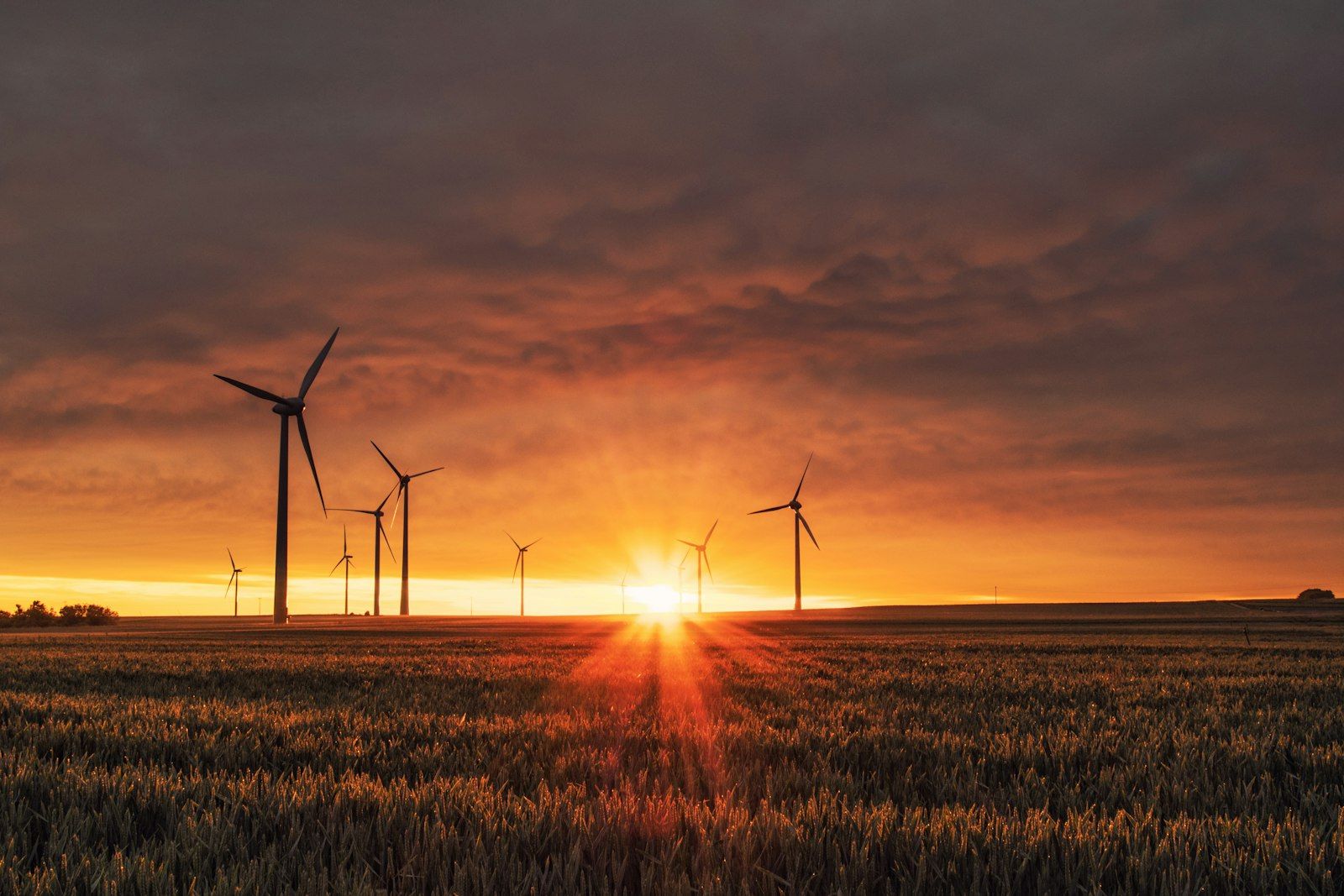
The first heat alert of the season landed on a Thursday, which is the day a friend in the California ISO’s operations center calls "the most boring day in power." Thursday afternoons are when industrial load is high and residential cooling is low and nobody is paying attention. By six o’clock that evening the wholesale price for a megawatt-hour on the grid had cleared at $940, which is roughly twenty times the price it cleared at on Monday¹ — and the heat wave, which the National Weather Service had been warning about for nine days, had not even begun.
I have been thinking about that Thursday for about a month. Not because anything went catastrophically wrong; nothing did. The lights stayed on. Nobody died. The story did not even make the Sacramento Bee. But the price tells you everything you need to know about the gap between the climate transition we have agreed to on paper and the climate transition we are actually building.
The grid does not know it is Thursday. The grid does not know that climate change is on the news. The grid is a real-time auction for the right to deliver one more electron, and on a Thursday in May, with a heat wave forty-eight hours out, it cleared at twenty times its normal rate because the supply curve was bending vertical against demand that was not even peak demand. It was warm-up demand.
A pricing problem, not a willpower problem
There is a habit, in climate writing, of telling stories in moral registers. We need to choose better. We need to want it more. The story is rarely told as a story about prices, which is unfortunate, because the story is almost entirely a story about prices.
When the operator at the California ISO sees a price like $940 per megawatt-hour, what they are seeing is a system telling them, with mathematical clarity: you do not have enough firm capacity for the demand you are about to face. The price is not a punishment. It is a signal. And the signal, lately, has been arriving earlier and earlier in the year, which means the system’s reserve margin is being eaten by exactly the kind of slow, structural heating that climate models have been forecasting for thirty years.²
The signal is not noisy. The signal is not subtle. The signal is a thousand dollars a megawatt-hour on a Thursday in May.
The honest answer to what we should do about this is unsatisfying, because it does not involve a clever app or a celebrity-backed nonprofit. The honest answer is that we should be building transmission lines and four-hour storage at a rate this country has not built infrastructure since the Eisenhower highway program, and we should be doing it in places where local politics make every line a four-year permitting fight. That is the actual climate transition. The rest is decoration.
What the ISO operators see
I spent two days last summer in the gallery above the California ISO’s main operations floor, on a press visit that I had been angling for since 2022. The floor itself is not dramatic. It looks like a small NASA control room that has been redecorated by a regional bank. The drama is on the screens, and the drama is almost entirely about reserves.
A grid operator is not, fundamentally, trying to deliver clean power, or cheap power, or even reliable power in any abstract sense. A grid operator is trying to hold a thirteen percent operating reserve at all times — enough surplus capacity to absorb the loss of the single largest generator on the system without dropping load. On a Thursday in May, with industrial demand normal and cooling demand starting to climb and a heat wave forty-eight hours out, that reserve was sitting at about six percent. The $940 price was the auction the system runs in real time to find more.
I asked one of the operators — a woman in her mid-fifties with thirty years on the floor — what she would do if she were running the world. She said: "I would build storage. I would build storage like we built freeways. I would build storage until the price on a Thursday in May was the same as the price on a Sunday in October." She said this the way somebody says they would like to lose ten pounds. With a small, sad laugh.
The slow climate
I have started using the phrase "the slow climate" to describe what is actually happening, as distinct from the climate we read about. The fast climate is the wildfire and the hurricane and the photograph of the polar bear. The slow climate is the actuarial table. It is the insurance company quietly pulling out of three counties in Florida. It is the cost of a homeowners policy in Paradise, California, going up by 340 percent in four years. It is the reserve margin on a Thursday in May, on a normal day, sitting at six percent instead of thirteen.
The slow climate does not make for compelling television, which is most of why it does not get the political weight it deserves. But it is what is actually doing the damage, and it is what the people who price risk for a living — reinsurers, grid operators, mortgage underwriters — have been quietly screaming about for the last decade.³
A reinsurer I have known since 2019 puts it this way: "We are not arguing about whether climate change is real. We have not been arguing about that for fifteen years. We are arguing about which decade in the next forty is going to be the one where the loss curves stop being insurable." That is the conversation. It is happening in offices in Munich and Zurich and Bermuda, and it is not happening on cable news.
So. The grid does not know it is Thursday. The reinsurers know what year it is. The rest of us are somewhere in between, and the work of the next decade is, mostly, building the boring infrastructure that closes the gap. Wires. Storage. Substations. Permits. A great deal of permits.
I am not optimistic about the politics. I am cautiously optimistic about the engineering. The two are very different things, and the next twenty years of this story are going to be the story of which one moves faster.
Write to me, as always, at adam@fieldletter.dcrader.dev. I read every reply.
Notes
- 1. California Independent System Operator, OASIS market data, hour-ending 18:00 PT, April 23 2026. Monday’s comparable price was $46.40/MWh.
- 2. The clearest recent treatment of this dynamic is the Lawrence Berkeley National Laboratory’s "Western Resource Adequacy in a Warming Climate" working paper, March 2026.
- 3. See Swiss Re Institute, "Sigma 03/2025: Natural catastrophes in 2024" — the third year in a row global insured losses crossed $130bn.
If this is your sort of thing, get the next one.
One long essay, every Sunday. No advertising, no tracking pixels, no five-things-to-do-in-five-minutes. Just twenty-two thousand readers and a single, well-cared-for email.
Free. Unsubscribe in one click. We never share the list — we have nobody to share it with.